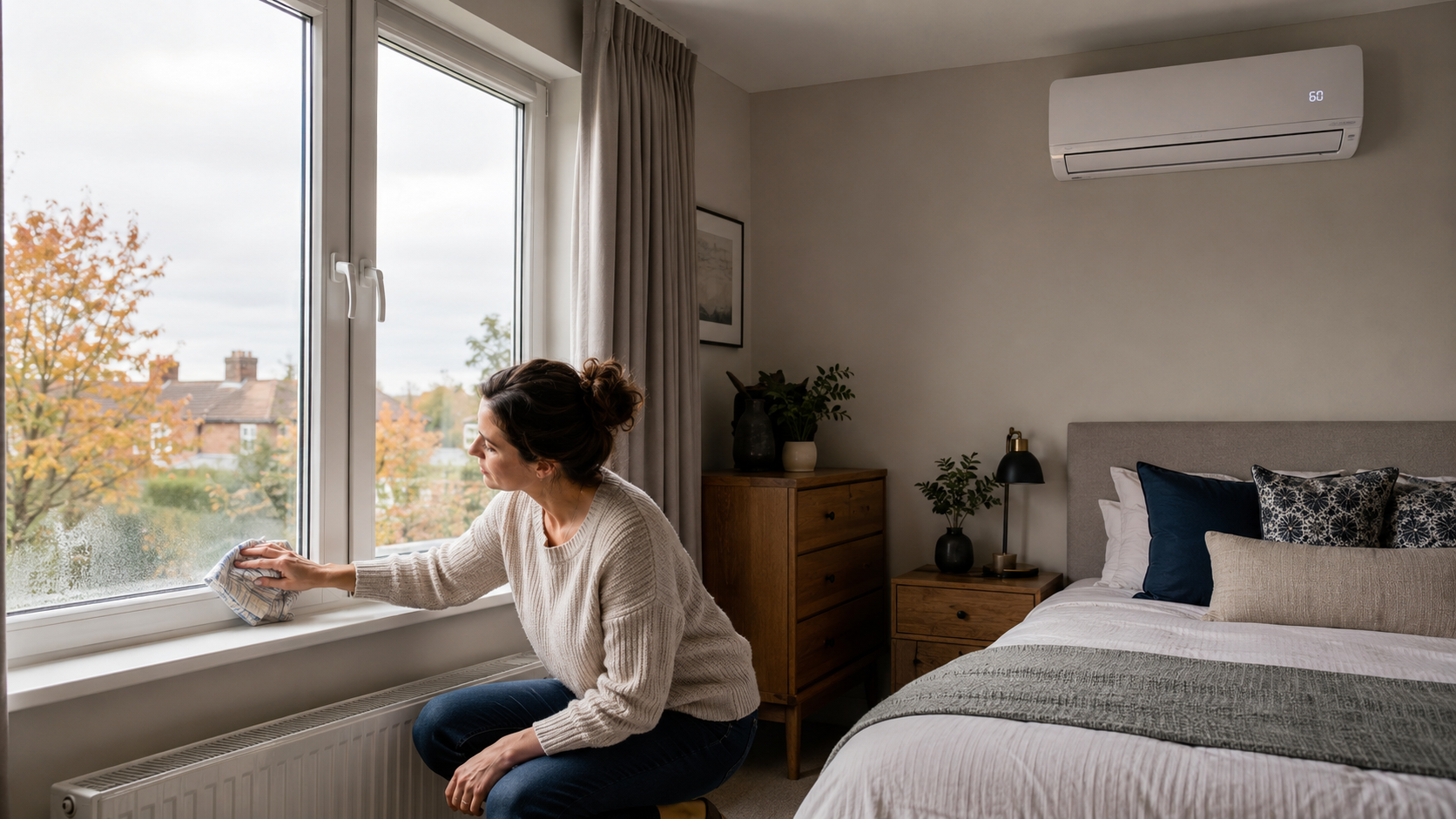
As summer gives way to cooler autumn weather, many Essex homeowners begin noticing condensation on their windows, particularly first thing in the morning. Bathrooms remain damp for longer, bedrooms can feel clammy and musty patches may begin appearing around windows or on colder external walls.
Modern air conditioning can help control indoor humidity and create a more comfortable environment. However, it is important to understand what an air conditioning system can do, and when condensation may indicate a wider problem with the property.
Why Does Condensation Become Worse in Autumn?
Condensation forms when warm, moisture-filled air comes into contact with a colder surface. As outside temperatures fall, windows, external walls and poorly insulated areas become cooler, making them more likely to attract condensation.
Everyday activities add moisture to the air, including:
- Cooking
- Showering and bathing
- Drying clothes indoors
- Breathing while sleeping
- Using unvented tumble dryers
- Keeping windows closed for longer periods
Modern homes can be particularly vulnerable because improved insulation and draughtproofing prevent warm air from escaping. This is helpful for retaining heat, but moisture can also become trapped unless the property has adequate ventilation.
Can Air Conditioning Remove Moisture From the Air?
When operating in cooling or dehumidification mode, an air conditioning system draws warm room air across a cold coil. Moisture within that air condenses inside the unit and is carried safely away through the condensate drainage system.
This process can reduce indoor humidity, making the room feel fresher and less clammy.
Many modern air conditioning units include a dedicated dry mode. This allows the system to reduce humidity without cooling the room as aggressively as its standard cooling setting.
Dry mode can be particularly useful during mild but humid weather, when a home feels uncomfortable even though the temperature is not especially high.
How Can Lower Humidity Help Your Home?
Controlling excessive indoor humidity can provide several practical benefits.
Less Condensation on Windows
Reducing moisture in the air can help limit the amount of condensation that forms on cold glass and window frames.
A More Comfortable Bedroom
High humidity can make a bedroom feel stuffy or clammy. Air conditioning can help maintain a more consistent temperature and humidity level, creating a more comfortable sleeping environment.
Faster Drying After Everyday Activities
Moisture produced by showering, cooking or drying laundry can remain in the home for hours. Air conditioning can help remove some of this excess moisture, particularly when used alongside suitable extractor fans and ventilation.
Reduced Conditions for Mould Growth
Mould thrives in damp, poorly ventilated areas. Keeping humidity under control can make the environment less favourable for mould, although any existing mould or underlying building defect will still need to be addressed properly.
Protection for Furniture and Decorations
Persistent dampness can affect paintwork, wallpaper, curtains, soft furnishings and timber furniture. Better humidity control may help protect the condition of your home and belongings.
Does Heating Mode Remove Humidity?
Most modern air conditioning systems can provide energy-efficient heating as well as cooling. Heating a room can make it feel drier because warmer air can hold more moisture, but heating mode does not necessarily remove that moisture from the property.
If humidity reduction is the main objective, dry mode or cooling mode is generally more effective because moisture is physically collected and drained away.
The most suitable setting will depend on the indoor temperature, humidity level and type of system installed. An experienced air conditioning engineer can explain how to use your particular unit effectively throughout autumn and winter.
Is Air Conditioning a Complete Solution for Damp and Mould?
Air conditioning can help manage indoor humidity, but it should not be used to disguise a structural or ventilation problem.
Persistent damp patches, heavy condensation or recurring mould could be caused by:
- Leaking pipes or guttering
- Water entering through the roof or walls
- Poor insulation and cold bridging
- Inadequate bathroom or kitchen extraction
- Blocked air vents
- Rising or penetrating damp
- Furniture positioned tightly against cold external walls
If condensation continues despite sensible temperature and ventilation control, the underlying cause should be investigated. Simply cleaning mould from a wall without dealing with the moisture source is unlikely to provide a lasting solution.
Which Rooms Benefit Most From Humidity Control?
Air conditioning can be useful in several areas of the home.
Bedrooms
Moisture naturally builds up overnight while people are sleeping. A correctly sized, quietly operating system can help maintain a comfortable bedroom environment.
Garden Offices
Garden rooms and converted outbuildings can become cold and damp during autumn. Air conditioning provides both heating and cooling, helping the space remain usable throughout the year.
Open-Plan Kitchens and Living Areas
Cooking can produce considerable heat and moisture. A properly designed air conditioning system can improve comfort within larger open-plan areas, although it should still be used alongside suitable kitchen extraction.
Conservatories and Glazed Extensions
These rooms often experience significant temperature changes. They may overheat in sunshine and then cool rapidly after sunset, increasing the likelihood of condensation.
Home Gyms
Exercise produces additional heat and moisture. Air conditioning can help make a home gym more comfortable while controlling humidity and improving air movement.
Why Correct System Sizing Matters
Installing the largest available unit is not necessarily the best way to control temperature or humidity.
An oversized system may cool a room too quickly and switch off before it has removed enough moisture. An undersized unit may run continuously without achieving the desired temperature.
A professional survey should consider:
- The size and layout of the room
- Ceiling height
- Window size and orientation
- Insulation levels
- The number of occupants
- Heat produced by appliances
- How the room is normally used
Correct sizing helps the system operate efficiently while providing consistent temperature and humidity control.
Keep Your Air Conditioning System Clean
Filters collect dust and airborne particles during normal operation. If they become clogged, airflow and system performance can be reduced.
Regular servicing allows an engineer to inspect and clean important components, check the condensate drainage and confirm that the system is operating correctly. This is particularly important when the unit is used throughout the year for cooling, dehumidification and heating.
A blocked or poorly maintained condensate drain can lead to leaks, unpleasant odours or unwanted moisture around the indoor unit.
Take Control of Autumn Condensation
You do not have to accept steamed-up windows and clammy rooms as an unavoidable part of autumn.
A professionally designed air conditioning system can provide cooling, heating and humidity control from one installation. Used correctly, it can help create a more comfortable environment while reducing some of the conditions that contribute to condensation and mould.
If you are considering air conditioning for your home, bedroom, conservatory or garden office, iCool Air Conditioning can assess your property and recommend a system suited to the way you use the space.
Contact iCool Air Conditioning on 0800 779 7742 to arrange a consultation or request a quotation.